Bleeding from the nose, medically known as epistaxis, is a common condition that occurs when the blood vessels inside the nose rupture. The inside lining of the nose contains many small and delicate blood vessels that can easily break due to different causes. Nosebleeds can happen in both children and adults and are usually not serious, but sometimes they may require medical attention.
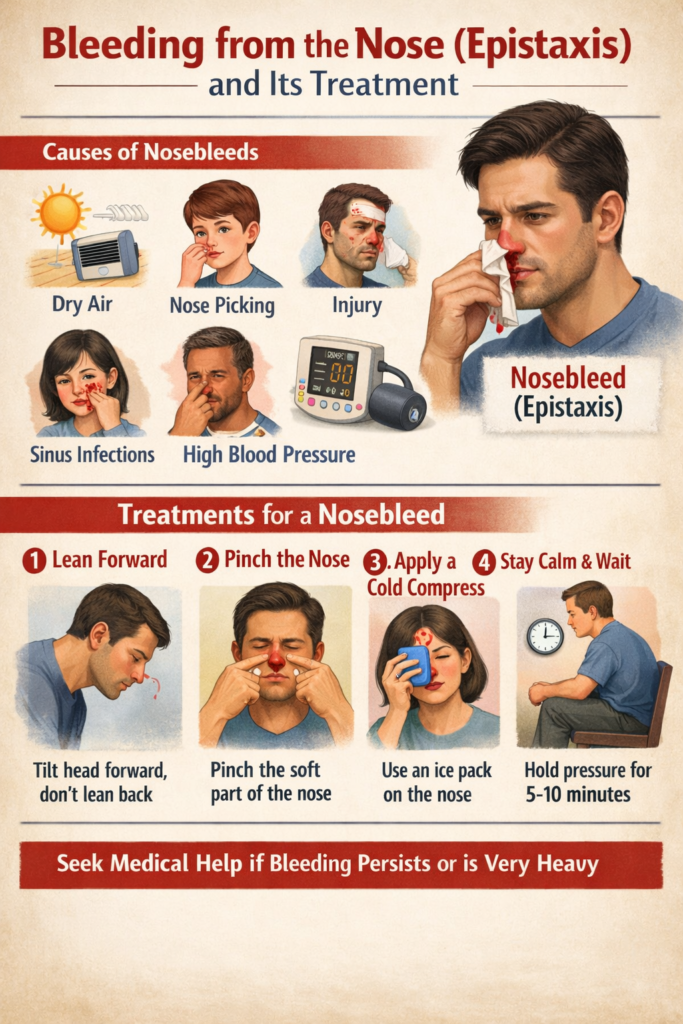
There are several causes of nosebleeds. The most common cause is dry air, which dries the nasal membrane and makes the blood vessels fragile. Nose picking, injury to the nose, common cold, allergies, and sinus infections can also lead to bleeding. In some cases, high blood pressure, blood-thinning medicines, or clotting disorders may cause frequent or severe nosebleeds. Hot weather and dehydration can also increase the risk.
Nosebleeds are generally divided into two types: anterior nosebleeds and posterior nosebleeds. Anterior nosebleeds occur from the front part of the nose and are the most common type. Posterior nosebleeds come from deeper inside the nose and are more serious, usually affecting older adults.
The treatment of a nosebleed usually starts with simple first-aid steps. The person should sit upright and lean slightly forward to prevent blood from going into the throat. The soft part of the nose should be pinched gently for about 10 minutes while breathing through the mouth. Applying a cold compress or ice pack to the bridge of the nose can help reduce bleeding. It is important not to tilt the head backward, as this may cause blood to be swallowed.
If bleeding continues for more than 15–20 minutes, medical help should be sought. Doctors may treat persistent bleeding with nasal packing, chemical cauterization, or medications to stop the bleeding. In rare severe cases, surgery may be required.
To prevent nosebleeds, it is helpful to keep the nose moist with saline sprays, drink plenty of water, avoid nose picking, and manage allergies properly. Maintaining good nasal hygiene can significantly reduce the chances of recurrent nosebleeds.